Monday, November 1, 2010

Dinosaur Sketch


My wife and I attended the Montana Festival of the Book over the weekend and attended Jack Horner's presentation about his newest book How to Build a Dinosaur. I had my Moleskine journal with me so I started doodling one of the dinosaur images at the beginning of the presentation and was able to finish this small sketch before the presentation was completed. He was kind enough to sign my drawing along with my wife's copy of How to Build a Dinosaur. It's always a treat to meet an author we especially like and we found that Dr. Horner was a very approachable and patient person.

I had been lucky enough to attend a symposium in Bozeman, Montana (the home of the Museum of the Rockies, where Horner is curator) and listened to another presentation for the Guild of Natural Science Illustrators before leading us on a field trip to the Museum of the Rockies where we were given a behind-the-scenes look at the efforts that go into creating and preserving the many exhibits at the museum.

It was one of those experiences that makes you say, "If I ever got the chance to work here, I would be in heaven." Unfortunately I don't know how to weld, have never cast a bone in a silicone mold, haven't created exhibit displays where the specimen can be removed for study and reinserted without causing damage to the display or, more importantly, the bones themselves. Needless to say, I'd need a few more qualifications which is why their current exhibit coordinator is so unique. It's a great museum and well worth the visit if you even happen to be in Bozeman before traveling down to Yellowstone National Park.

Thursday, October 28, 2010

New drawing completed: Raven Study


Just in time for Halloween, here is a link to my web page with a recently completed drawing of a Raven. I tried to play around with the graphical elements of the raven to produce a dynamic pose even though he’s perched on a static limb. By spreading the feet, lowering the center of gravity and stretching the neck out just a bit, I hope it imparts a feeling of potential action that I was going for.


The print is available in both 11×14 and 16×20 frame sizes and printed on 100% cotton rag fine art paper with pigment-based archival inks.

Plans for our basement renovation

I’ve been working on the plans for our basement remodel for the last couple of weeks. I ran across a great application by Google called SketchUp. It’s a great application to create 3-dimentional models and it’s FREE! It took a bit to learn the application and I would highly recommend anyone interested to view all of the online tutorials before diving in.


Our basement is partially finished and we’ve been making due with cold concrete  and really inadequate lighting for quite a while. Our new plans will involve the finishing of two separate rooms, one a smaller bedroom that we’ll use for framing and matting and a large common room (shown below) that we’ll divide into an area as an indulgent reading room along with a separate office / studio space for myself. I’ve included some images from the SketchUp program showing our current plans.

Wednesday, October 27, 2010

Raven Study study

I hope you'll excuse the quirky title for this smaller sketch. I am nearly finished with a raven drawing that I've been working on for the last couple of weeks. It's taking me so long because we are beginning the process of remodeling our basement and I've been developing the architectural drawings for the contractor. I'll try to create a separate post to talk more about this process.

Turning to the sketch, the first thing I'll comment on is the paper selection. I am a paper nut and have a large 14"x17" portfolio packed with numerous different papers (I believe there are 15 or more different papers in this single portfolio and I have another!). I use different papers depending on the subject, the size of the piece, or simply my mood for that day. This is one of those times when I went back to a paper that I seem to be drawn to whenever I really just want to have fun drawing a piece -- Arches Hot Press watercolor paper. I use the back side of the paper which lacks the laid pattern of the front side. It's a wonderful paper for pencil drawing because it's quite robust, allowing the artist to erase lines, lighten previously drawn areas, or simply scrub in some really beautiful darks.

The reason I selected this paper for the raven was that it allows an extremely wide contrast range and also allows me to create some intricate details at a fairly small scale. It seemed to work pretty well for this piece.

I am going to really try to use Arches more often as I really like the results I can obtain with it and it feels a lot more like sketchbook or drawing paper than bristol board. It's a little finicky with hard grades (2H or harder) but if you use a dab of blending with a tortillion occasionally, you can avoid having to use extremely hard pencils.

Tuesday, October 19, 2010

Currently reading...

A Short History of Nearly EverythingA Short History of Nearly Everything by Bill Bryson


Extremely accessible, appropriately amusing, and very informative. I am really enjoying the book and can say that Bill Bryson's understated wit is very engaging.


View all my reviews

Monday, October 11, 2010

How To: Dog's Eye Tutorial

One of the most common questions I receive at shows is “How do you draw an eye?” usually followed by “…and make it look real?”

Well, there’s a long answer which would involve talking about reflectivity versus absorption, varying textures, pencil grades, layers, etc., and then there’s simply showing what I mean step-by-step. This post will attempt to explain the process by walking you through a 15-minute drawing and how I go about drawing eyes.

Thursday, October 7, 2010

Results from our new panini grill

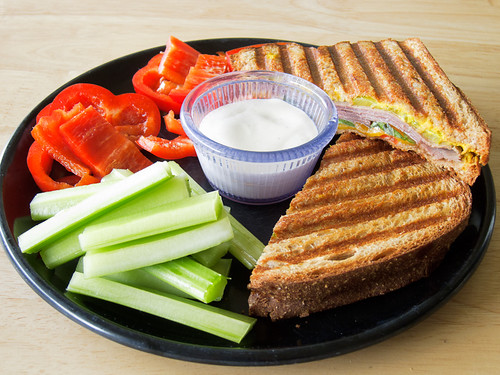
We just purchased a new panini grill and here is the first sandwich prepared on it. It's a roast beef and cheddar with red bell pepper and basil. I think we'll keep it! :-D


Tuesday, September 28, 2010

REVIEW: Canson's XL Recycled Bristol pads

In our age of increasingly bottom-line driven business strategies, it's a delight to come across a company interested in doing things right. I recently came across a new paper by Canson while surfing online and became curious about it's specifications. I've used seven other types of Canson paper and really like their consistency, versatility, and quality (Canson Field Sketch, Canson Field Drawing book, Canson Student Bristol Smooth and Vellum, Canson 2-ply Bristol Smooth, Canson 2-ply Bristol Art Board, Canson Pure White Drawing Art Board, and Canson Illustration Art Board).

This new paper is Canson XL™ Recycled Bristol. It's a 96 lb (260 gsm) stock, is bright white, and according to Canson, is the first recycled two-sided paper (vellum on the front side and smooth on the back).


I've never used a recycled bristol board and my main concerns were the archivability and whether it contained optical brighteners. As a quick explanation, archivability is critical to ensure long-term preservation of paper-based art. It's simply non-negotiable for my work. An acid-free paper will resist yellowing and when properly matted and framed, will remain in great condition and lasts more than a lifetime (and sometimes several).


Optical Brighteners (OB's) are often used in recycled paper to bleach the pulp and make it more pleasing to look at. It's not inherently bad but it can have detrimental long-term effects for artwork because it can change subtly over time, most often dulling unevenly. It's a bigger issue with printer papers but can be found in fine art papers as well.


With these concerns in mind, I sent off an e-mail to Canson hoping someone might be able to answer my questions. I must admit that I had very low expectations that someone might respond. Interactions with other paper suppliers have provided some convincing evidence that their salespeople don't actually know a heck of a lot about paper. Well, I can state definitively that my fears were completely unfounded. I received a a detailed and thoughtful response from Michelle R. She not only answered my questions directly and with clear knowledge of the paper manufacturing process, she went well above and beyond by offering to send a sample of the paper so I could try it out. I was simple stunned.


The First Tests:
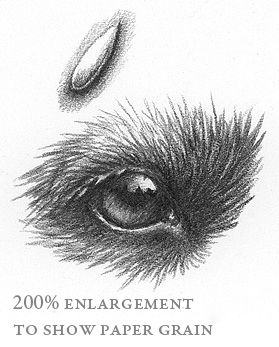
I'm happy to report that the paper is even better than I had hoped. I've included a couple of small sketches from each side of the paper. These are 200% enlargements so the grain is much more visible than in person.


First the Smooth (back) Side:


and the Vellum (front) Side, which has a nice tooth for tonal drawings.

I can see applications for both sides of this paper. It is easy to scan, erases well, and is resilient enough to allow you to fine tune details and tones until you get them just right. Dual-sided papers can sometimes be a bit lacking in versatility because the manufacturing process doesn't have the same standards on each side. I would say that Canson has indeed made a truly 2-sided paper with both sides having independent and high-quality surfaces.

It will be interesting to see how the textured side responds to colored pencils. I would imagine it would be a great surface to accept numerous layers and being bright white should make the colors pop off the paper.

Summary
Overall I would praise the XL Recycled Bristol from Canson as a high-quality recycled (30% post consumer materials) paper. It's bright white, erases well, and is very resilient. With being acid free and lacking any added optical brighteners, it is a great choice and earns a Highly Recommended!

4 out of 5 Pencils
HIGHLY RECOMMENDED

Thursday, September 23, 2010

Photos from Glacier National Park

Moose enjoying a morning dip.
Continuing on my photo publishing kick. Here are a few from our trip to Glacier National Park.


I've posted the albums both to a Flickr album as well as another Facebook album.


I hope you enjoy them.

Wednesday, September 22, 2010

Photos from our horseback trip

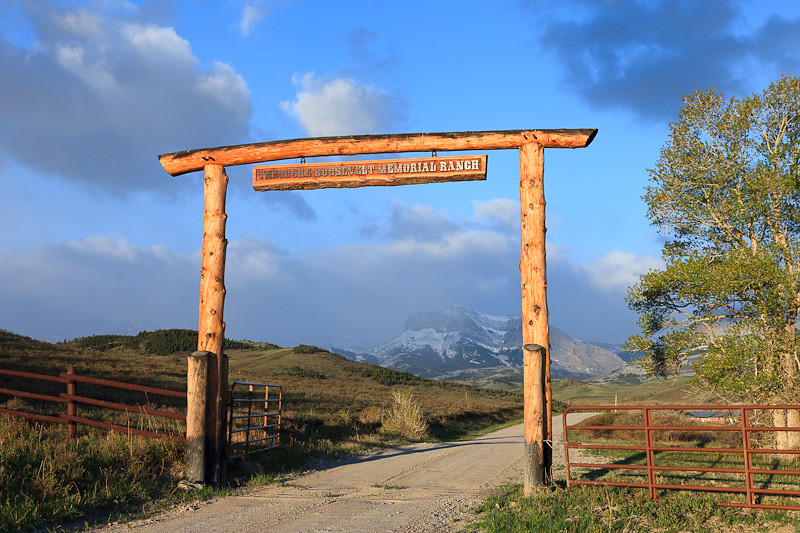
Theodore Roosevelt Memorial Ranch
I've posted photos from our horseback trip to a Flickr Album and to a Facebook Album (you have to be a friend to view these) for those with a preference for either technology.

These are from our trip to the Theodore Roosevelt Memorial Ranch in May. It's on the Rocky Mountain Front and was our first experience in that area of the state. It was tremendous and it's very likely that we may go back from a return trip.